
Introduction:
SEO trends for 2025 highlight how search engine optimization has evolved as search engines and online user behavior have grown more complex. These trends emphasize the importance of adjusting strategies to remain competitive. In 2025, SEO will be more crucial than ever for businesses looking to improve their contact, reputation, and online awareness. The basic rules of SEO are examined in this essay, along with its main concepts and the four essential elements needed for a successful SEO plan in 2025.
An Overview of the Development of SEO trends in 2025:
From its early days of keyword stuffing and poor link-building, SEO has advanced significantly. Search engines are becoming better at separating high-quality material that fulfills user needs from low-quality or inappropriate pages with each Google algorithm update, including Panda, Penguin, Hummingbird, and more recent developments driven by AI. These modifications highlight a significant change in SEO: an effective approach now revolves around quality, significance, and user experience. An efficient SEO strategy in 2025 necessitates paying close attention to details in a number of areas, from website performance to content quality.
Why SEO Is Still Important? Key SEO Trends for 2025
- Increased Visibility: SEO helps more people find your business online.
- Better User Experience: A faster, easier-to-use website keeps visitors happy.
- Cost-Effective Marketing: SEO brings free traffic, unlike paid ads that cost money.
- Builds Credibility and Trust: High search rankings make your business look more trustworthy.
- Targeted Traffic: SEO brings people who are already interested in what you offer.
- Competitive Advantage: Good SEO helps your business stand out from others in your field.
SEO is still essential for driving potential clients to a company’s website in the digital age, where there are numerous content choices. The most recent state SEO strategy places great importance on achieving search intention and making certain that the information offered is correct, reliable, and useful. High search results help businesses become recognized as reliable authorities in their industries by increasing awareness of the brand, website traffic, and trustworthiness. Businesses cannot afford to overlook SEO’s importance in 2025 since it is an essential part of achieving and maintaining online success.
Core Components and Goals of an Effective SEO Strategy:
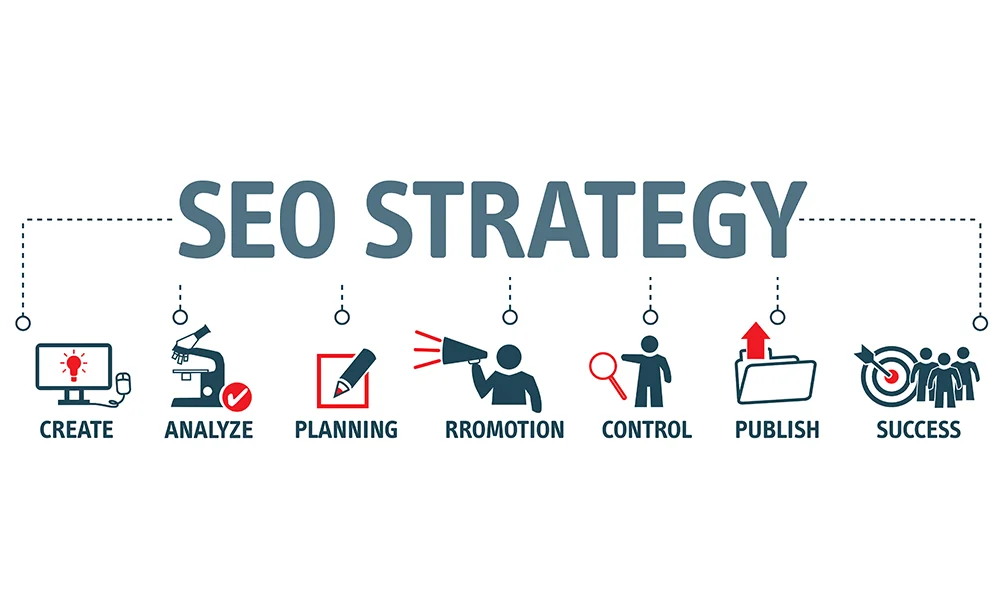
- Keyword Research: Finding the right words people use to search for what you offer.
- On-Page Optimization: Making sure your website is clear and easy to find on search engines.
- Quality Content: Creating useful content that answers what people are looking for.
- Backlink Building: Getting other trustworthy websites to link to yours.
- Technical SEO: Ensuring your website loads quickly and works well on all devices.
Any SEO strategy for 2025 must start with a well-rounded approach that includes technical optimization, user-focused design, high-quality content, and effective authority-building techniques. All of these components work together to create a comprehensive SEO plan that satisfies the high standards of search engine algorithms while actually meeting the demands of users. Businesses can develop a more targeted, successful SEO strategy by clearly defining objectives for each element.
-
Understanding Key SEO Components
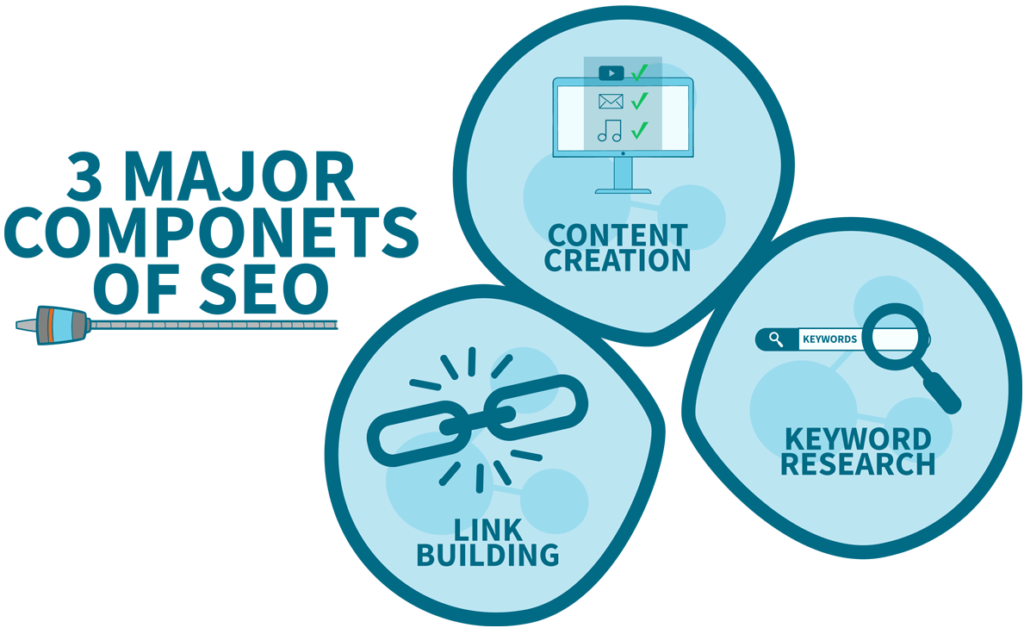
Content Creation: This involves producing high-quality, engaging, and relevant content for your audience. It’s important for attracting visitors and keeping them on your site.
Link Building: This is the process of getting other websites to link back to your site. These backlinks help improve your site’s authority and ranking on search engines.
Keyword Research: This is about finding the right words and phrases that people are searching for online. Using these keywords in your content helps your site appear in search results when people look for those topics.
Content optimization, technical SEO, user experience (UX), and authority-building through link-building are all essential components of a good SEO plan. Every element is necessary for several reasons, and when combined, they offer clear SEO state advantages:
The information on your website is guaranteed to be important, orderly, and suited to the search terms of your audience thanks to content optimization. By ensuring that search engines can effectively crawl and index your website, technical SEO increases the possibility that it will show up in search results, which is crucial for SEO optimization in 2025.
Delivering an enjoyable and pleasurable experience to visitors, increasing engagement, and decreasing bounce rates are the main goals of user experience, or UX. By linking your website to other reliable sites, Link-Building and Authority assist in building credibility and increasing your site’s perceived trustworthiness in the eyes of search engines and people alike.
The 4 Core Elements of Any SEO Strategy in 2025:
To create a well-rounded SEO strategy, businesses need to prioritize four essential elements: content, technical aspects, user experience, and link-building. When combined, these components provide a strong foundation for improving search engine visibility and credibility.
1) Content Optimization:-

Keyword Usage: Use relevant keywords to boost rankings.
High-Quality Content: Provide valuable, engaging content.
Content Structure: Organize content for easy readability.
Meta Tags: Optimize titles and descriptions for better visibility.
Internal Linking: Link to other pages to improve SEO.
Content optimization is a key SEO component aimed at improving website content for both visitors and search engines. By selecting the right keywords, you increase the chances of ranking higher in search results and meeting user intent with valuable, educational material. In addition to keyword use, content optimization focuses on readability, user experience, and meta tags to boost click-through rates. High-quality, relevant content builds trust and encourages repeat visits. As we approach SEO trends for 2025, optimized content will remain essential for maintaining search rankings and enhancing user engagement, ultimately improving visibility, traffic, and conversions.
2) The Function of High-Quality, Important Content:-

Improves Search Rankings: High-quality content helps your site rank higher by aligning with search intent and using relevant keywords.
Increases User Engagement: Engaging content keeps visitors on your site longer and encourages them to explore more.
Builds Trust: Valuable content establishes credibility, making users more likely to return and trust your brand.
Encourages Conversions: Quality content motivates visitors to take actions like making purchases or subscribing.
Important, high-quality content is essential for drawing in and maintaining visitors to your website. By selecting the right keywords and attending to user needs, it helps raise search engine ranks, which is crucial in light of SEO trends for 2025. Content that is informative keeps visitors interested and motivates them to stay on your website longer. Additionally, it increases trust, which increases the likelihood that customers will return and think highly of your business. In the end, high-quality content motivates users to take actions like buying something or registering, which increases conversions.
3) Integrating EEAT Standards:
Google highlights Expertise, Experience, Authoritativeness, and Trustworthiness (EEAT) as crucial criteria for material that ranks highly. Including EEAT entails:
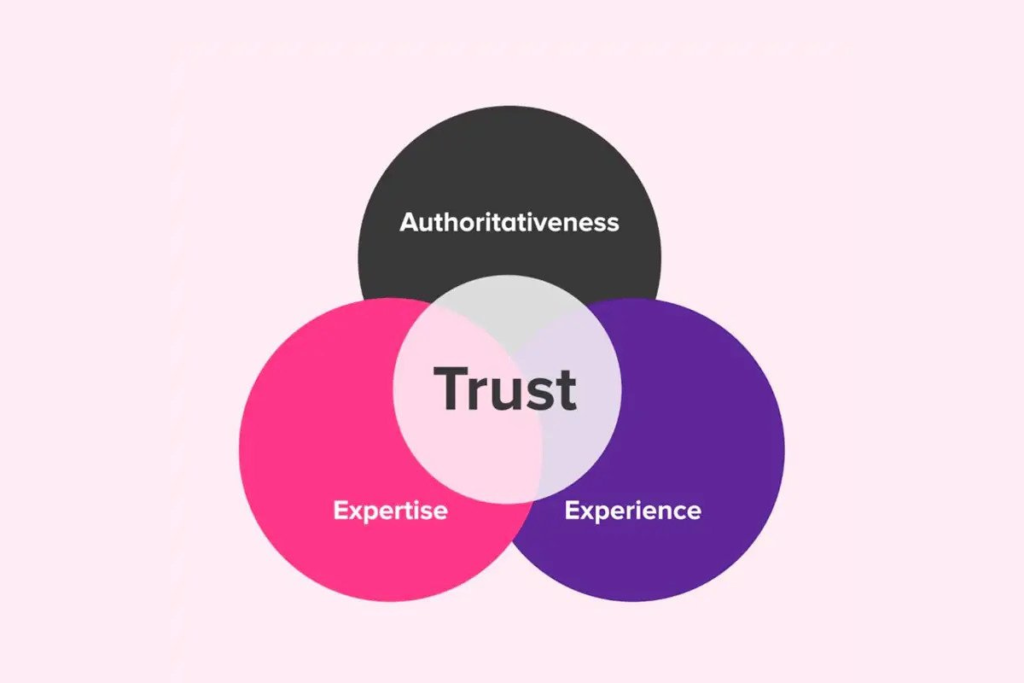
- Expertise: Content should come from knowledgeable sources.
- Experience: The creator should have real-world knowledge.
- Authoritativeness: The source should be trusted by others.
- Trustworthiness: Content must be reliable and honest.
4)Technical SEO: Key SEO Trends for 2025 You Need to Know:
The process of improving a website’s structure to increase its functionality, involvement, and search engine indexing is known as technical SEO. This covers things like making a website faster, making it more mobile-friendly, ensuring the website is properly designed, and resolving crawlability problems. Businesses can guarantee that search engines can effectively scan and index their material and provide a smooth user experience by focusing on technical components. This will improve ranks and increase organic traffic. As we look toward SEO optimization in 2025, it remains an essential part of any complete SEO plan.
Why is technical SEO important?
- Better Rankings: Optimizing technical elements boosts search engine rankings.
- User Experience: Faster, mobile-friendly, and secure sites improve user satisfaction.
- Crawl Efficiency: Easier access for search engines to index key pages.
- Lower Bounce Rates: Faster load times and smooth navigation keep users engaged.
- Rich Snippets: Schema markup helps attract more clicks by enhancing search results.
Key Technical Elements for SEO Success in 2025:
Technical SEO involves optimizing the infrastructure of a website to ensure search engines can effectively crawl and index its pages. Key areas to prioritize include:
Site Structure:
A well-organized site structure helps users and search engines navigate the site efficiently. Clear URL hierarchies, breadcrumb navigation, and XML sitemaps are essential for an optimized site structure.
Crawlability and Indexability:
It is crucial to ensure that search engines can easily crawl and index content. This involves removing or updating outdated pages, using robots.txt files properly, and avoiding duplicate content.
Speed Optimization:
Site speed is directly linked to user satisfaction. Techniques such as image compression, minimizing JavaScript, and leveraging caching are necessary for fast load times.
Mobile Usability:
With most internet traffic from mobile devices, optimizing for mobile is non-negotiable. Responsive design, mobile-friendly navigation, and avoiding intrusive interstitials contribute to a better mobile experience.
Importance of UIX in SEO:
With Google ranking websites more and more according to human interaction, user experience is an essential part of SEO. Longer visits and more page interactions are encouraged by a well-designed website with easy-to-use navigation, simple calls to action, and accessibility features. Important UX factors include:
Easy navigation should make it simple for users to locate the information they require. This consists of an easy-to-use menu structure, search bars that are visible, and useful internal links.

- Enhanced User Engagement: A user-friendly design encourages visitors to explore more, increasing interaction with the site.
- Improved Bounce Rates: Easy navigation and design reduce bounce rates by keeping users on the site longer.
- Faster Load Times: Optimized UI/UX ensures faster page loads, which boosts both user experience and SEO rankings.
- Mobile Optimization: Responsive design ensures a seamless experience across all devices, improving SEO performance.
- Clear Navigation: Well-organized menus and layout help users find content easily, enhancing both user experience and search engine indexing.
Quality Link-Building Strategies in 2025:
One of the most effective SEO strategies for 2025 to raise a website’s authority is still link-building. But in 2025, quality will be prioritized over quantity. It is essential to use ethical link-building strategies, such as guest posting on respectable websites, obtaining mentions from reliable sources, and producing material that is deserving of links. To further enhance the website’s worth and credibility, links must be relevant and come from reliable sites within the same industry.
SEO optimization in 2025 requires a focus on brand mentions and ethical link-building. To avoid fines, link-building must be done ethically. Instead of buying links or depending on spam directories, businesses can look for organic link-building options. Utilizing brand mentions is also a smart move; converting unlinked mentions into links can raise SEO ranks and increase domain authority.
SEO strategy is essential for online exposure, engagement, and commercial success in today’s digital environment. Setting specific, quantifiable SEO goals is essential as 2025 draws near in order to successfully negotiate the changing SEO landscape. This is a detailed approach on creating an SEO strategy that works, focuses on meeting user search intent, and complies with Google’s EEAT algorithm (Expertise, Experience, Authoritativeness, and Trustworthiness).

- Importance on High-Authority Sites: In order to maximize SEO benefits, target links from accurate, authoritative websites.
- Provide Useful Content: Produce educational and reshareable content that promotes healthy backlinks.
- Guest Blogging with a Purpose: Write for well-known, specific websites to increase backlinks that benefit the readership.
- Increase Your Link Profile: To give search engines the impression that your profile is natural and comprehensive, get backlinks from a range of sources.
Establishing Specific, Measurable SEO Objectives:
Goals should be well-defined, structured, and in line with corporate objectives if you want SEO to have a significant influence. Setting SEO goals is made easier with the help of the SMART framework, which stands for Specific, Measurable, Achievable, Relevant, and Time-bound.
Specific:
Your goals should specify exactly what you hope to accomplish. A specific objective would be to “boost organic traffic” as opposed to a general one like “increase website traffic.”within six months, by 20%. It is easier to concentrate efforts when the goal is more specific.
Measurable:
Establish the metrics for evaluating progress. This involves setting up KPIs (Key Performance Indicators) including conversion rate, bounce rate, organic traffic, and click-through rate (CTR). These indicators enable continuous evaluation and modification while also helping in the verification of success.
Achievable:
While having challenging goals is vital, they must also be reasonable. For instance, it could be inappropriate to try to double traffic in a month, but it might be reasonable to strive for a 20% increase over a few months.
Relevant:
Make sure your SEO objectives complement your overarching business objectives. For example, SEO aims should concentrate on generating high-conversion traffic rather than just attracting people if your main business target is to boost online sales.
Time-bound:
Establish due dates to generate a feeling of urgency and give an accurate window of time to evaluate success. An example of a measurable deadline is “achieve a 15% increase in organic search visibility within the next quarter.”
Businesses may create a targeted, applicable SEO strategy that produces tangible results and fits in with their top objectives by setting SMART goals.
Improves Search Engine Rankings: Backlinks help your site rank higher in search engine results.
Increases Organic Traffic: Higher rankings lead to more visibility and more visitors.
Builds Credibility and Trust: Quality links from reputable sites boost your site’s authority.
Faster Indexing: Backlinks help search engines discover and index your content more quickly.
Traffic Targets:-
The technique of sending particular kinds of visitors to your website according to their search objectives, interests, behavior, or characteristics is known as traffic targeting. Businesses may enhance the quality of traffic and increase engagement and conversion rates by determining and focusing on the appropriate audience. Using data-driven methods like SEO, sponsored advertisements, and content marketing to draw in visitors who are most likely to be interested in your goods or services is known as effective traffic targeting. This strategy helps you attain better outcomes and a higher return on investment by making sure your marketing efforts are not wasted on irrelevant visitors.
As we approach SEO strategies for 2025, a clear path is provided by establishing traffic targets based on historical performance and market research. For instance, setting a goal of 30% more organic traffic might help direct link-building, content production, and keyword tactics.
- Improve SEO: Optimize your content to rank higher in search results.
- Leverage Social Media: Share content across platforms to drive traffic.
- Create Quality Content: Publish valuable, shareable content regularly.
- Use Paid Ads: Run targeted ads on Google and social media.
- Guest Blogging: Write for other sites to reach a wider audience.
- Collaborate with Influencers: Partner with influencers for more exposure.
- Build Backlinks: Gain quality backlinks to boost SEO and traffic.
- Email Marketing: Direct subscribers to your site with relevant offers.
In conclusion, increasing website traffic requires a combination of clever SEO, informative content, and successful promotion across various channels. Regular work in these areas will increase targeted traffic and boost the performance of the website as a whole, taking full advantage of SEO state advantage in 2025.


Key SEO Trends and Challenges in 2025:
As we approach 2025, SEO optimization will be crucial for businesses aiming to boost their online presence. Key trends will include AI-powered search algorithms, increased focus on voice search, and mobile optimization. With more users relying on voice assistants and mobile devices, businesses must optimize for these platforms. User experience (UX) will also play a major role, with search engines favoring fast-loading, easy-to-navigate sites. However, challenges like algorithm updates and growing competition will test marketers. To succeed in SEO optimization 2025 and adapt to the demands of future SEO, businesses must stay agile, embrace new technologies, and consistently deliver value to users.
AI and Machine Learning in Search Algorithms
As part of the SEO trends for 2025, search engines are increasingly relying on AI to deliver more accurate and relevant results by understanding user intent. SEO strategies must adapt to this shift by focusing on high-quality, user-centered content.Voice Search Optimization
One of the key SEO trends for 2025 is the rise of voice assistants. Optimizing for voice search is crucial, which means using conversational language and answering common questions directly to capture voice-driven queries.Mobile-First Indexing
SEO trends for 2025 show that Google now prioritizes mobile-friendly websites in its rankings. Ensuring that your site is responsive and offers a smooth mobile experience is essential for SEO success moving forward.User Experience (UX) as a Ranking Factor
A major focus of SEO trends for 2025 is the emphasis on user experience. Websites that offer a fast, easy-to-navigate experience are favored by search engines. Focusing on improving loading speed, site structure, and content relevance will improve both user satisfaction and rankings.E-A-T (Expertise, Authoritativeness, and Trustworthiness)
As SEO trends for 2025 continue to evolve, Google emphasizes content that demonstrates expertise and trustworthiness. Businesses must ensure their content is accurate, well-researched, and produced by credible sources to rank higher.
Latest Alternatives to Google:-

Although, Google’s authority privacy concerns are making search engines like Bing and DuckDuckGo more popular. DuckDuckGo provides anti-tracking and privacy-focused features, while Bing is improving AI integration and personalized search. SEO specialists should think about optimizing for these platforms by being aware of their different ranking criteria, such as Bing’s focus on social signals and ranks for various media formats.
The Role of AI in SEO in 2025:
As we move into 2025, the role of AI in SEO is becoming increasingly important. AI technologies are transforming how search engines understand and rank content by focusing on user intent and providing more accurate search results. This shift is shaping the future of SEO, where AI-driven tools can help optimize websites, create personalized content, and improve user experience. As search engines become smarter, businesses must adapt to these changes by embracing AI to stay competitive and enhance their SEO strategies for the years ahead.
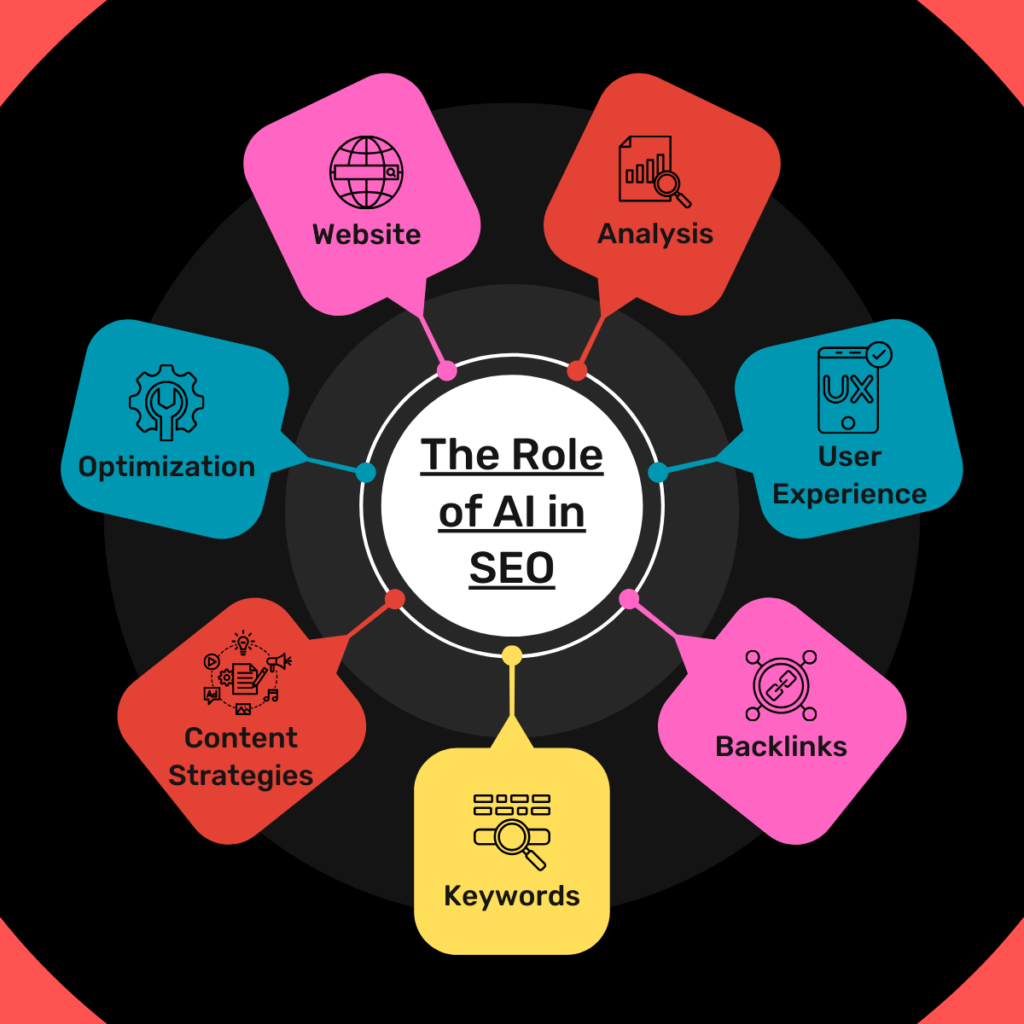
Website Optimization:Tools will suggest ways to improve website speed and user experience.
Analysis:Automated systems will help track trends and make SEO decisions faster.
Backlinks:Smart tools will find valuable backlinks to boost site authority.
User Experience:Personalization will improve user experience and enhance SEO performance.
Keywords:Technology will help find relevant keywords for better search rankings.
Content Strategies:Tools will create engaging content based on trending search queries.
Optimization:Automated processes will streamline content, image, and meta tag optimization.
Voice & Mobile Search Optimization:
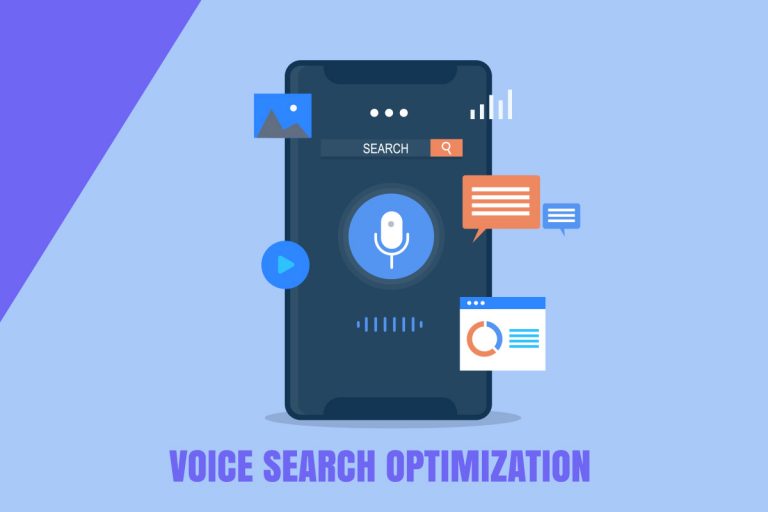
With the continued rise in voice search and the dominance of mobile-first indexing, optimizing for voice and mobile-first indexing is critical. Voice search queries tend to be longer and more conversational, reflecting the natural language that people use when speaking rather than typing. This shift means that content optimized for voice search should answer questions directly, often in a conversational tone. Including FAQ sections or structured snippets that provide concise answers can significantly enhance a website’s voice search rankings.
Why Semantic Keywords Matter:
Better User Experience: By optimizing for related terms, you help Google understand the context of your content, ensuring users find what they need, even if they search with variations of your target keywords.
Natural Language Processing: Google’s advancements in NLP means that focusing on semantically relevant keywords helps your content rank for more diverse queries.
For example, instead of only targeting “buy shoes,” you might also target “best running shoes,” “comfortable sneakers,” and “shoe store online.”
Use Long-Tail Keywords: Capturing Targeted Traffic
Long-tail keywords are longer, more specific search phrases that often capture users with higher intent. These keywords typically have lower competition and are more likely to lead to conversions because they address specific needs.
Why Long-Tail Keywords Work:
Higher Conversion Rates: Users searching for specific terms (e.g., “best hiking boots for women 2025”) are often closer to purchasing or taking action.
Reduced Competition: Long-tail keywords usually face less competition, making it easier to rank for them.
More Accurate Targeting: Long-tail keywords help ensure your content meets specific search queries, making it more relevant for users.
Optimize for Emerging Terms: Finding New Keywords as Trends Evolve
The digital landscape is constantly evolving, and so are the keywords people use to search. To stay ahead of the curve, it’s essential to track emerging SEO trends for 2025 and optimize for new keywords.

- To use semantic keywords effectively, focus on related terms that help search engines understand your content’s meaning. Instead of repeating the same keyword, use synonyms or variations. Group content around similar topics to show context, and include long-tail keywords for more specific searches. This helps improve your rankings by making your content more relevant and easily understood by search engines. By using these strategies, you can target a wider range of search queries and improve visibility across different topics. It also makes your content more natural and user-friendly
CONCLUSION:
In conclusion, companies aiming to keep a strong online presence in 2025 will need to stay ahead of the SEO trends for 2025. Developing technologies like artificial intelligence (AI), mobile-first indexing, and improved user experience will be essential to maintaining competitiveness as technology advances. Businesses may raise their ranks, bring in more customers, and provide content that genuinely satisfies their audience’s needs by concentrating on intelligent SEO optimization in 2025. You’ll be ready for success in the dynamic field of SEO if you continue to adjust to these trends.
SEO (Search Engine Optimization) is the process of improving a website’s visibility on search engines like Google. In 2025, it’s more important than ever because it helps your website show up when people search for topics related to your business, making it easier to attract more visitors and customers.
- AI and machine learning: Using smart technology to understand and improve content.
- Voice search optimization: More people are using voice assistants, so your site needs to be ready for voice search.
- Mobile-first design: Websites must be easy to use on phones and tablets.
- User experience (UX): The easier and faster your website is to use, the better it will rank.
- Video content: Video is becoming more important for engaging users and ranking well.
AI is helping search engines better understand what users want. It also helps websites create better, more relevant content. AI tools can analyze trends, optimize content, and suggest improvements that can make your site rank higher.
User experience (UX) is crucial because Google rewards websites that are easy to navigate, fast, and mobile-friendly. Good UX helps visitors stay on your site longer and interact more, which can improve your rankings.
To improve page speed, you can:
- Compress images to reduce their size.
- Minimize the use of heavy scripts or unnecessary elements.
- Use a content delivery network (CDN) to speed up loading times globally.
Social media can impact SEO by driving traffic to your website. Search engines look at social signals (likes, shares, comments) to understand what content is popular. Engaging with users on social media can help your website rank better.